Blog Article
Hand Therapy: Regaining Function After Injury or Surgery
Explore how occupational and hand therapy restore strength, dexterity, and independence after carpal tunnel, fractures, tendon repairs, and arthritis.
Hand Therapy: Regaining Function After Injury or Surgery
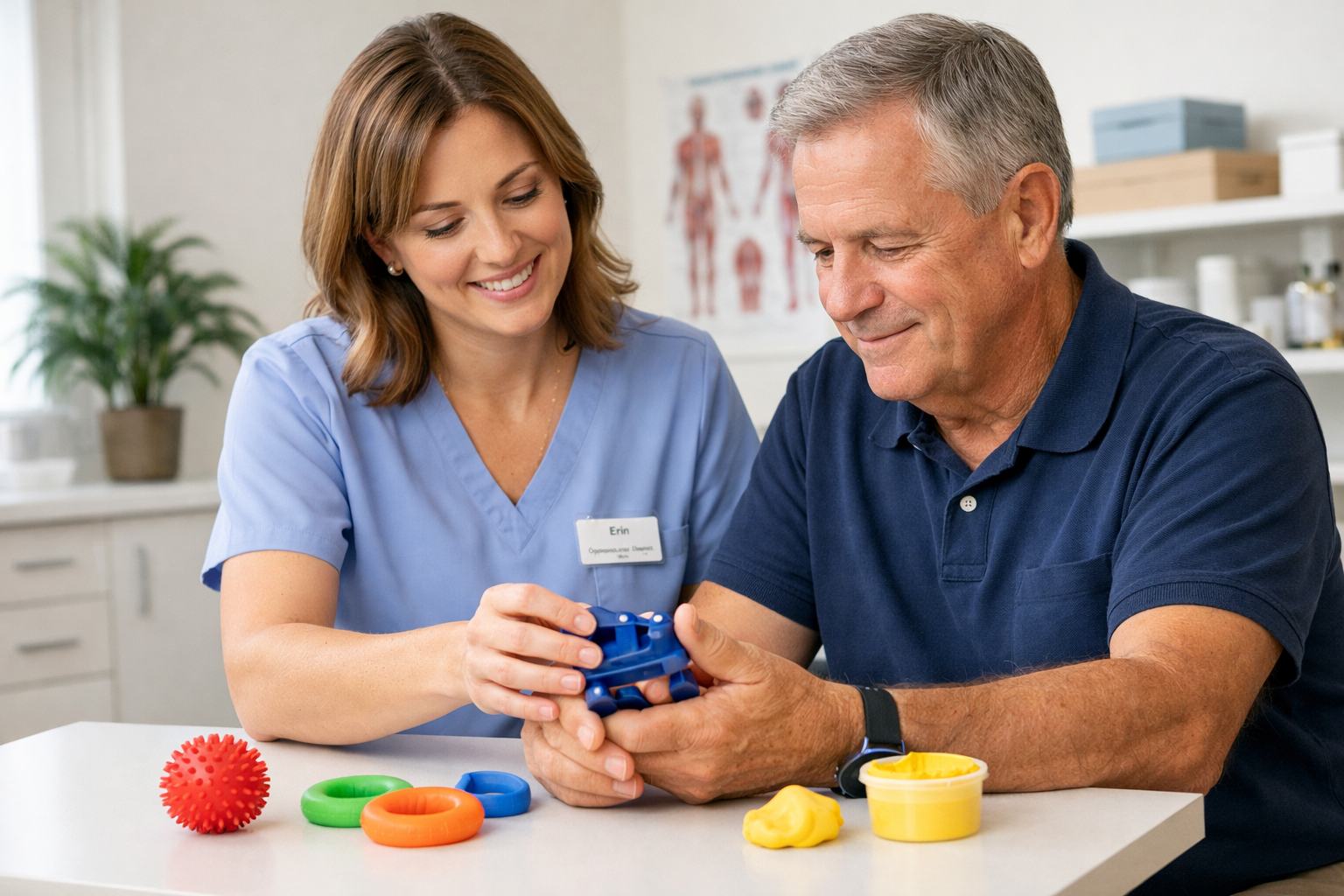
Your hands perform thousands of small movements every day — from buttoning a shirt to typing, cooking, and holding a loved one. When injury, surgery, or arthritis limits that function, even the simplest tasks can become exhausting. According to the American Society for Surgery of the Hand, more than 16 million Americans visit a physician each year for hand and upper extremity conditions. Specialized hand therapy helps patients regain strength, dexterity, and confidence — often avoiding further surgery.
Conditions Treated With Hand Therapy
- Carpal tunnel syndrome
- Trigger finger and De Quervain's tenosynovitis
- Fractures of the wrist, hand, or fingers
- Tendon and ligament repairs
- Arthritis of the hand and thumb
- Nerve injuries and compression syndromes
- Post-surgical recovery (tendon transfers, joint replacements)
- Dupuytren's contracture
What a Certified Hand Therapist Does
A Certified Hand Therapist (CHT) is an occupational or physical therapist with advanced training in the upper extremity. Their evaluation includes:
- Range of motion measurement with a goniometer
- Grip and pinch strength testing
- Sensation and nerve assessment
- Functional task analysis (writing, gripping, lifting)
- Custom orthotic fabrication when needed
Core Hand Therapy Techniques
1. Manual Therapy
Soft tissue mobilization, scar massage, and joint mobilization restore tissue glide and reduce pain.
2. Therapeutic Exercise
Progressive exercises target:
- Finger flexion and extension — 10 repetitions, 3 sets
- Thumb opposition — touching thumb to each fingertip
- Grip strengthening with putty or therapy balls
- Wrist curls with light dumbbells
3. Modalities
Paraffin baths, ultrasound, and electrical stimulation reduce pain and swelling during early recovery.
4. Custom Splinting
Therapists fabricate thermoplastic splints that protect healing tissues while allowing safe movement.
5. Edema Management
Techniques such as retrograde massage, compression gloves, and elevation control swelling to accelerate healing.
Recovery Timelines at a Glance
| Condition | Typical Recovery |
|---|---|
| Mild Carpal Tunnel | 4–8 weeks (non-surgical) |
| Wrist Fracture | 8–12 weeks |
| Flexor Tendon Repair | 12–16 weeks |
| Trigger Finger Release | 4–6 weeks post-op |
| Thumb Arthritis | 6–12 weeks (non-surgical) |
Everyday Habits That Speed Recovery
- Move often — frequent gentle motion prevents stiffness.
- Manage swelling — elevate the hand above heart level several times a day.
- Practice pacing — alternate activity and rest to avoid flare-ups.
- Use ergonomic tools — padded pens, jar openers, and adaptive keyboards reduce strain.
- Stay consistent — patients who complete home exercise programs recover 35% faster on average.
Why Early Treatment Matters
Research in the Journal of Hand Therapy shows that patients who begin therapy within two weeks of injury or surgery regain significantly more motion and strength than those who delay care. Early intervention also reduces the likelihood of developing complex regional pain syndrome (CRPS) and chronic stiffness.
Insurance and Accessibility
Optimum Care Therapy accepts most major insurance plans, including Medicare, Blue Cross Blue Shield, Aetna, Cigna, and United Healthcare. Our billing team verifies coverage and explains out-of-pocket costs upfront.
Regain What Your Hands Do Best
Our skilled hand therapists in Artesia, Downey, and Santa Ana help patients return to work, hobbies, and independent living. From the first evaluation through the final visit, we combine clinical expertise with genuine compassion.
Don't let hand pain limit your life. Request an appointment to get started with a personalized hand therapy plan.