Blog Article
Complete Guide to Knee Rehabilitation: Recover Faster and Stronger
Learn evidence-based knee rehabilitation strategies, recovery timelines, and exercises that help patients return to active living safely and effectively.
Complete Guide to Knee Rehabilitation: Recover Faster and Stronger
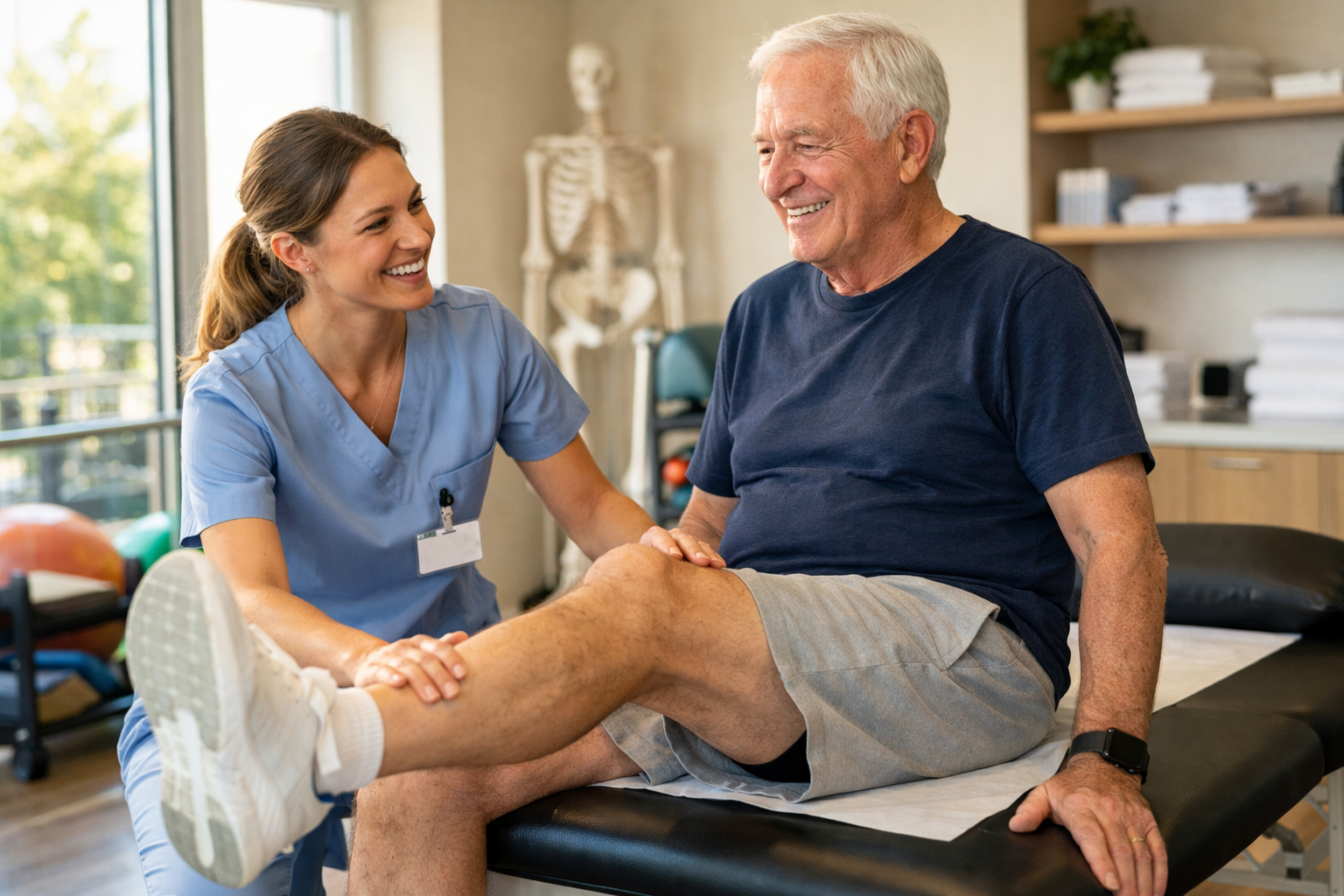
Knee injuries and post-surgical recovery affect millions of Americans each year. According to the American Academy of Orthopaedic Surgeons, more than 790,000 knee replacement surgeries are performed annually in the United States, and ACL injuries alone account for nearly 200,000 cases each year. Whether you are recovering from a torn meniscus, an ACL reconstruction, or chronic osteoarthritis, a structured physical therapy program is the single most important factor in restoring strength, mobility, and confidence.
Why Knee Rehabilitation Matters
The knee is one of the most complex joints in the body, supporting up to five times your body weight when running or climbing stairs. Without proper rehabilitation, patients often develop:
- Persistent stiffness and reduced range of motion
- Chronic pain that limits daily activity
- Muscle imbalances that increase re-injury risk by up to 35%
- Long-term instability or arthritis
At Optimum Care Therapy, our licensed therapists design individualized programs that address these risks at every stage of recovery.
The Four Phases of Knee Recovery
Phase 1: Protection and Pain Control (Weeks 1–2)
Focuses on reducing swelling, restoring gentle motion, and activating the quadriceps. Typical modalities include ice, compression, manual therapy, and straight-leg raises.
Phase 2: Mobility Restoration (Weeks 3–6)
Progressive range-of-motion work, stationary cycling, and controlled weight-bearing exercises help rebuild joint flexibility and early strength.
Phase 3: Strength and Stability (Weeks 6–12)
Closed-chain exercises such as mini-squats, step-ups, and resistance band work target the quadriceps, hamstrings, glutes, and calves — the foundation of a stable knee.
Phase 4: Return to Activity (Weeks 12+)
Sport-specific drills, balance training, and plyometrics prepare the knee for running, jumping, and athletic demands.
Five Evidence-Based Exercises We Use
- Quad Sets — Tighten the front of the thigh for 5 seconds, 10 repetitions.
- Heel Slides — Gently slide the heel toward the buttocks to improve flexion.
- Straight-Leg Raises — Strengthen the quadriceps without stressing the joint.
- Wall Sits — Build isometric endurance at 45–90 degrees of flexion.
- Single-Leg Balance — Retrains proprioception and prevents falls.
Clinical tip: Research published in the Journal of Orthopaedic & Sports Physical Therapy shows patients who complete at least 12 supervised PT sessions recover 40% faster than those relying on home programs alone.
When to Start Physical Therapy
Most orthopedic surgeons recommend beginning rehabilitation within 24 to 72 hours after surgery to prevent stiffness and muscle atrophy. For non-surgical injuries, early intervention reduces chronic pain risk by up to 60%.
Work With the Optimum Care Therapy Team
Our therapists in Artesia, Downey, and Santa Ana combine manual therapy, guided exercise, and advanced modalities to help you return to the activities you love. We accept most major insurance plans and offer convenient evening appointments.
Ready to start your recovery? Request an appointment or call your nearest clinic today.