Blog Article
Shoulder Sports Injuries: Prevention, Recovery, and Return to Play
A practical guide for athletes recovering from rotator cuff tears, shoulder impingement, and labral injuries, with timelines and proven rehabilitation exercises.
Shoulder Sports Injuries: Prevention, Recovery, and Return to Play
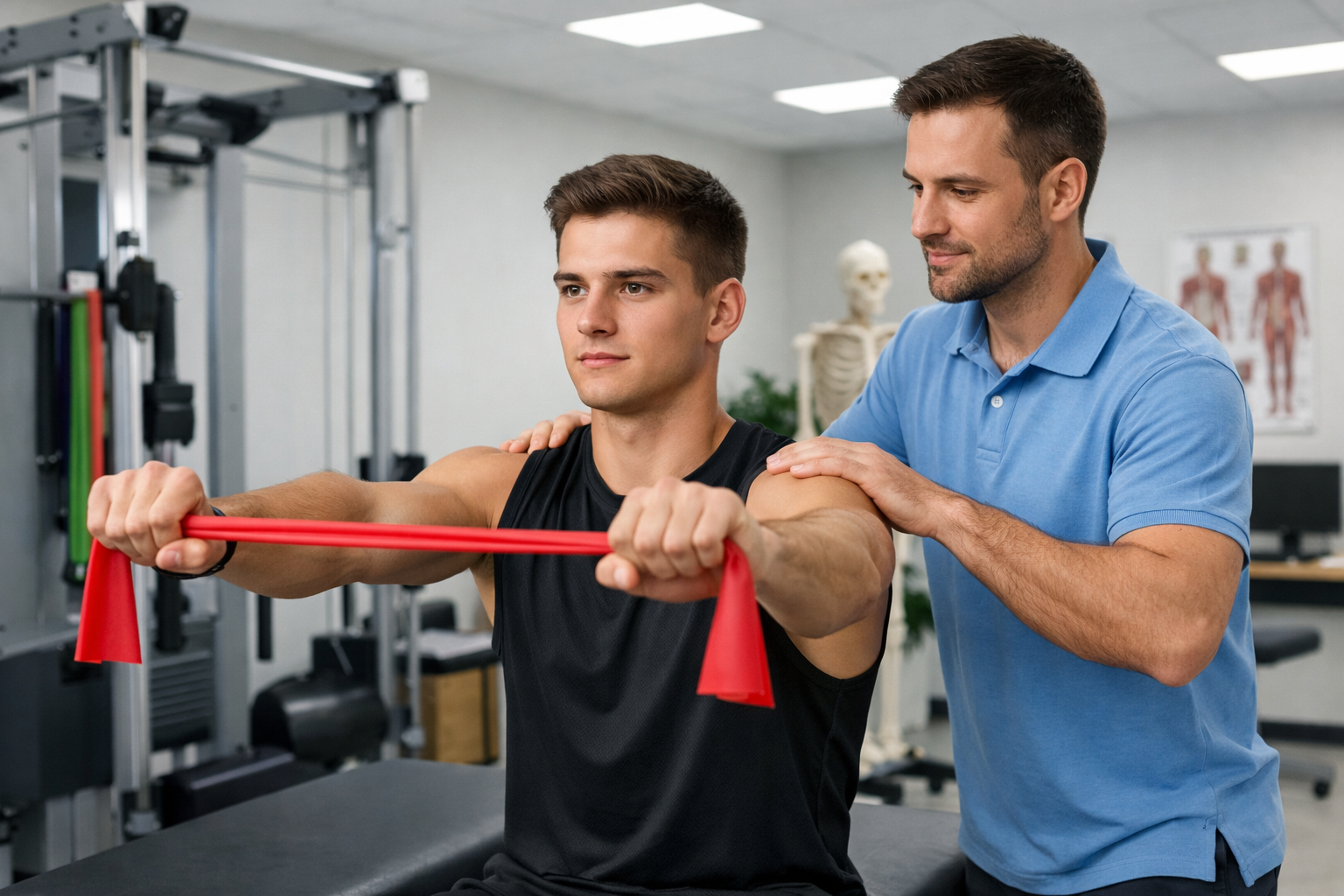
The shoulder is the most mobile joint in the human body, which also makes it the most injury-prone. Overhead athletes — swimmers, baseball players, tennis players, and volleyball players — report shoulder pain at rates as high as 66% during any given season, according to the American Journal of Sports Medicine. Whether you are dealing with a rotator cuff strain, impingement, or labral tear, a targeted rehabilitation program can return you to competition safely and often stronger than before.
Common Shoulder Sports Injuries
Rotator Cuff Tears
The rotator cuff consists of four small muscles that stabilize the shoulder. Tears affect roughly 2 million Americans annually and are responsible for 4.5 million physician visits each year.
Shoulder Impingement
Occurs when tendons become pinched under the acromion bone, often from repetitive overhead motion. It represents up to 65% of all shoulder complaints in primary care.
Labral Tears (SLAP Lesions)
Common in throwing athletes, these tears affect the ring of cartilage that deepens the shoulder socket.
Shoulder Instability
Repeated dislocations or subluxations, frequent in contact sports like football and wrestling.
The Four Pillars of Shoulder Recovery
1. Pain and Inflammation Control
Early treatment uses ice, activity modification, and gentle pendulum exercises to reduce swelling. Manual therapy can restore pain-free motion within the first two weeks.
2. Restoring Range of Motion
Progressive stretching of the posterior capsule, chest, and lats typically begins between weeks two and four. Sleeper stretches and cross-body stretches are staples of this phase.
3. Rebuilding Strength
Resistance band exercises target the rotator cuff and scapular stabilizers:
- External Rotation — 3 sets of 15 repetitions
- Internal Rotation — 3 sets of 15 repetitions
- Scaption Raises — 3 sets of 12 repetitions
- Rows and Y-T-W Raises — 3 sets of 10 repetitions each
4. Sport-Specific Training
Plyometric exercises, throwing progressions, and interval swim or serve programs prepare the shoulder for the demands of competition.
Expected Recovery Timelines
| Injury | Non-Surgical Recovery | Post-Surgical Recovery |
|---|---|---|
| Rotator Cuff Strain | 6–8 weeks | 4–6 months |
| Shoulder Impingement | 8–12 weeks | 3–4 months |
| Labral Tear (SLAP) | 12–16 weeks | 4–6 months |
| Shoulder Dislocation | 12–16 weeks | 4–6 months |
Prevention Strategies for Athletes
Research shows that structured prevention programs reduce shoulder injury incidence by up to 28%. Key habits include:
- Warming up with dynamic mobility drills before practice
- Strengthening the posterior chain and scapular stabilizers
- Avoiding sudden spikes in training volume
- Getting 7–9 hours of sleep for tissue repair
- Scheduling annual movement screenings
Why Choose Optimum Care Therapy
Our sports-trained therapists work with athletes from youth leagues to collegiate programs. We combine manual therapy, progressive exercise, and advanced modalities such as dry needling and blood flow restriction training to accelerate recovery without compromising long-term health.
Ready to get back in the game? Book a sports evaluation at our Artesia, Downey, or Santa Ana clinic.